INTRODUCTION
Niigata Venture Capital has invested in IntegriCulture, linking cell cultivation with local brewing resources. The deal matters because the company will seek earlier revenue from cosmetics while its food work remains at the demonstration stage.
Green Queen values the investment at ¥100 million, or $635,000, from the Regional Revitalisation Niigata Fund II. Cultivated X and vegconomist report the same transaction but say the amount was not disclosed. The three accounts agree that sake lees, algae residue and other underused materials helped attract the investor. They also identify regional fermentation, brewing and food processing as the industrial base for the work.
IntegriCulture, a cell-culture technology supplier, plans to spend the money on cosmetic ingredients, sales staff, regional partnerships and internal research. The Tokyo company also works on cultivated food and supplies media, equipment and contract development. In Niigata Prefecture, it is collaborating with Ichimasa Kamaboko, Tsunan Sake Brewery, universities and food-service businesses. The stated aim is to test products and cultivation infrastructure with local materials before applying the model elsewhere.
CORE DECISION
Niigata Venture Capital, a regional investment firm, made the investment through a fund intended to support local economic activity. The investor based its decision partly on plans to turn brewing and food-processing side streams into inputs for growing cells, according to Cultivated X and vegconomist. The money will first support a route to sales through cell-based cosmetic materials. Food development continues alongside that work, but the sources identify cosmetics as the nearer commercial target. This distinction matters. The funding does not amount to a new cultivated-food launch, regulatory clearance or production commitment. It finances product development, customer recruitment and a regional test network.
FUNDING
The reports disagree on how much money changed hands. Green Queen says the investor supplied ¥100 million, or $635,000. The other two publications describe the amount as undisclosed. None explains the difference, so the larger disclosure cannot be independently reconciled from the supplied material. Green Queen places the capital within a projected ¥700 million, or $4.5 million, extension to the company’s Series A. The publication says the business had secured ¥375 million, or $2.4 million, of that target and was seeking more participants before year-end. Founder and chief executive Yuki Hanyu told Green Queen that other investors might join. That remains an expectation from management, not a completed financing.
COMPANY
The company was founded on 23 October 2015 and is based in Tokyo, according to Cultivated X and vegconomist. Its operations cover cultivation media, equipment and development services, as well as ingredients for food and cosmetics. Its CulNet System generates growth components within the cultivation setup. In 2022, the business reported that this approach grew cells without animal serum at an estimated one-sixtieth of the cost of conventional serum, according to both publications. The sources provide no independent cost assessment, production volume or like-for-like definition of the conventional serum benchmark. The cost figure should therefore be read as a company estimate rather than verified plant economics.
The financing history also differs across the accounts. Green Queen says the original Series A raised ¥800 million, or $7.5 million, in 2020. Cultivated X and vegconomist instead refer to $7 million in Series A-plus funding without giving the year in that passage. The labels and dollar totals do not fully match. Exchange-rate treatment or round classification may account for the gap, but the sources do not say so. Green Queen also reports that the company became profitable in the 2025 financial year, citing Hanyu. No revenue, profit or cash-flow figures accompany that claim.
PROCESS
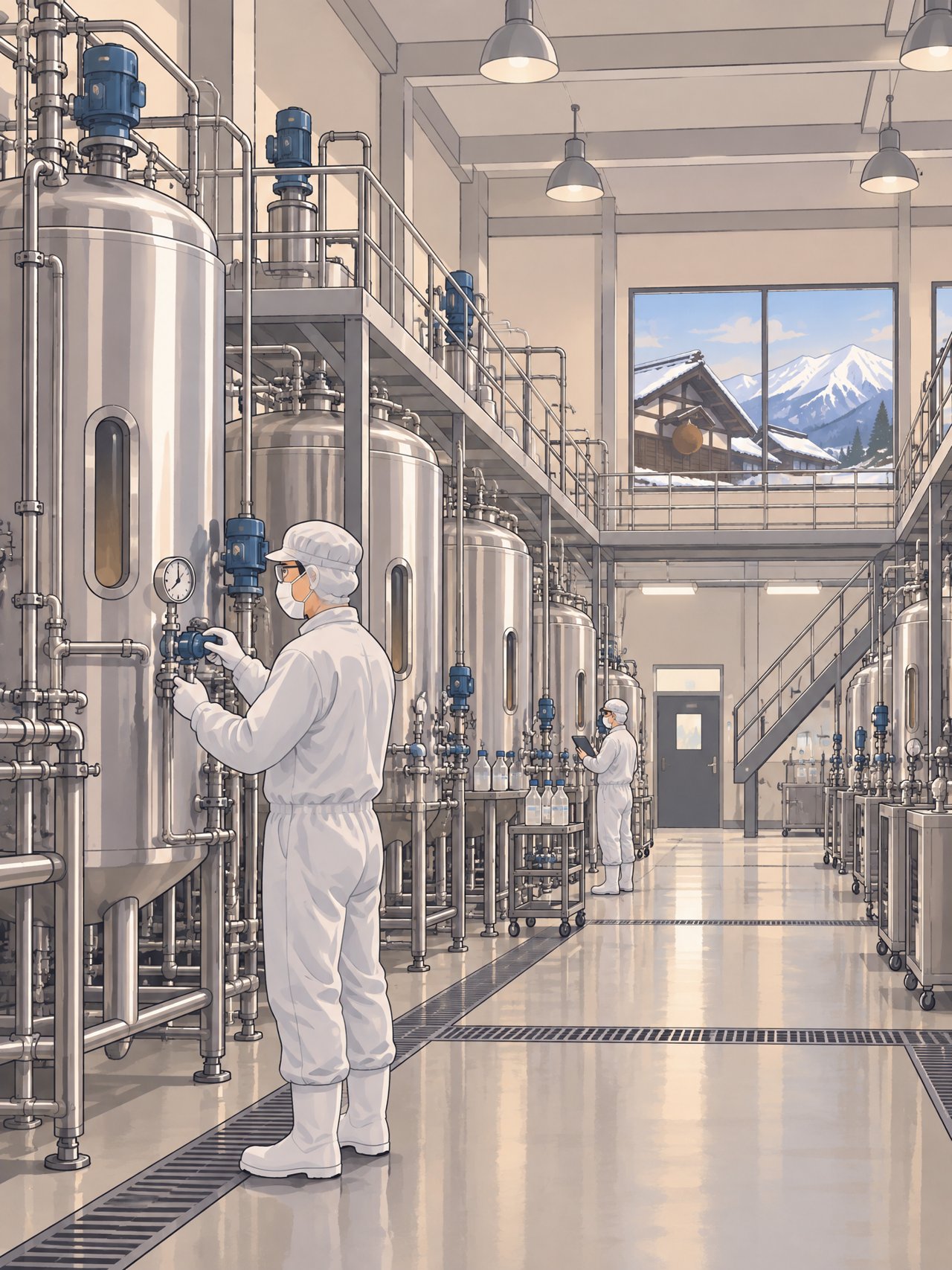
The Niigata programme combines cell-culture equipment with materials and skills already present in the prefecture. A joint research and development agreement with Tsunan Sake Brewery covers prototypes for food and cosmetic ingredients made with the brewery’s natural water, according to Cultivated X. The partners ultimately plan to install the supplier’s cultivation equipment at the brewery. No installation date, capacity or budget appears in the supplied reports. Green Queen uses the English name Tsunan Brewing Co for the same regional partner. The publications agree on the role: the brewer provides a site, water, side streams and fermentation knowledge for cultivation trials.
Sake lees remain after brewing and are one proposed culture input. Algae residue offers another underused material. Co-chief executive and chief technology officer Kazuhiko Kawashima says cells have grown in brewing water and sake lees during the work, as reported by all three publications. The sources give no data on cell type, growth rate, yield, contamination control or composition. They also do not establish whether the residues replace a complete medium or only supply selected nutrients. The reported result supports further trials. It does not yet show that brewery side streams can support commercial output at consistent quality.
COSMETICS
Cellament is the company’s main cosmetic ingredient described by Green Queen. The publication says it comes from selectively cultivated egg-associated cells, including amnion, yolk-sac and plasma-membrane cells. Management presents the material as a serum containing proteins and growth factors. Green Queen reports company claims that Cellament can lower enzyme activity linked to loss of skin elasticity by 10% to 70%. The business also says the ingredient can speed skin-cell turnover and improve moisture retention in outer skin cells. The supplied sources give no study design, sample size, comparator or peer-reviewed evidence for those effects. Singapore-based Umami Bioworks is combining Cellament with its fish cells for cosmetic development, according to Green Queen.
The new capital will support further cosmetic development and commercial work. Management plans to expand sales operations to recruit business customers. It also intends to work with financial institutions and companies involved in local innovation, according to Green Queen. The choice of cosmetics offers a possible revenue route before cultivated foods reach broad commercial use, but the evidence remains limited to the company’s plan. The reports name no signed customer arising from the investment. They provide no sales target, product price or launch timetable. Green Queen adds that the deal follows a partnership with Singapore’s ImpacFat one month earlier to develop cosmetics using cultivated omega-3 fish fat.
FOOD PROGRAMME
Food research remains part of the portfolio. Cultivated X and vegconomist say the Japanese government provided $18.7 million to demonstrate commercial operation of cultivated foie gras and serum platforms. Those publications also report prototypes based on cultivated duck liver. Green Queen adds seafood to the company’s product work. The supplied material does not identify a market authorisation, sale or restaurant launch for any of these foods. Nor does it state the output of the government-backed demonstration. The investment therefore supports a company with cultivated-food projects, but its immediate spending priority sits outside food.
REGIONAL NETWORK
The regional work extends beyond the brewery. Ichimasa Kamaboko, universities and food-service operators are taking part in Niigata, according to all three reports. Green Queen says the company joined the Niigata Food Tech Town Initiative several months before the investment. Japanese retailer Oisix and manufacturing group NSG Group run that programme. Management expects the prefecture to serve as a base for research, commercial trials and customer checks before similar arrangements expand to other areas. That expansion is a company expectation. The sources identify no second region, committed site or timetable.
Niigata Venture Capital director Toshihiko Nagase argues that the cultivation platform fits the prefecture’s brewing, fermentation and food-processing base. He also expects businesses using sake lees to create local economic value, according to Green Queen. Hanyu says construction of a food-technology cluster that includes cell-cultured food has formally begun in the prefecture. The reports provide no membership list, public budget or governance structure for that cluster. They also do not define what formal commencement requires. The regional case rests on named partners and an investment, while the wider cluster remains described largely through management and investor statements.
LIMITS
Several commercial questions remain open. The sources provide no valuation, ownership stake or investment terms for the Niigata transaction. They do not say whether the remaining portion of the planned ¥700 million extension has committed backers. No report gives production costs for Cellament, expected margins, manufacturing capacity or customer orders. The brewery project lacks a date for equipment installation. Its cultivation results lack measurements that would allow comparison with standard media. Hanyu says rule-making for cell-based foods is accelerating and overseas work is moving towards business demonstrations, according to Green Queen. The reports identify no specific regulation, regulator, filing or approval linked to the Niigata programme.
CONCLUSION
The investment has a clear commercial order: pursue cosmetic sales, test local side streams and continue food demonstrations. Its value will rest on disclosed customers, measured cultivation results and the planned brewery installation, not on the appeal of joining old fermentation skills to newer cell culture.