SEED CONTENT — placeholder text, safe to delete.

Cultivated fat is animal fat grown from cells rather than harvested from an animal. The starting material is usually a pre-adipocyte line, a cell type that can be pushed to accumulate lipid under the right conditions. Grown in a tank, fed a defined medium, and then differentiated, those cells fill with fat much as they would in tissue.
Flavour is the reason companies keep working on it. Most of what people recognise as the taste of beef, pork or chicken comes from lipid-soluble compounds and from the reactions fat drives during cooking. Lean muscle protein alone reads as thin and slightly metallic to tasting panels. Blending even a small proportion of cultivated fat into a plant-protein base changes the result noticeably.
Texture is the second reason. Fat sits between muscle fibres and melts during cooking, which is what produces the sensation described as juiciness. Solid plant fats behave differently: they melt at the wrong temperature, or they leave a coating that panels describe as waxy.
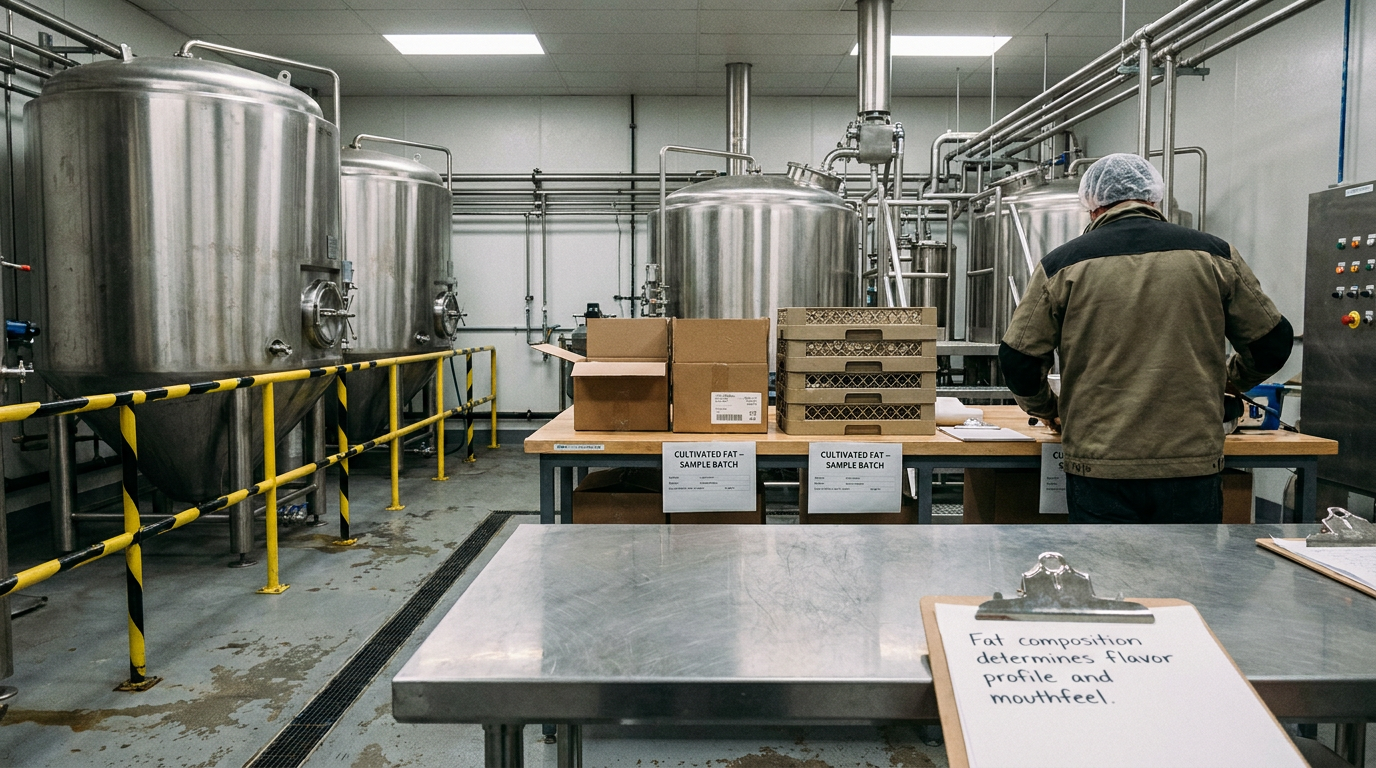
The manufacturing case is more favourable than for whole-cut muscle. Fat does not need to be structured, so it can be grown in suspension and harvested as a paste, which avoids the scaffold problem entirely. That makes it one of the few cell-agriculture products with a plausible route to commodity volumes.
The open questions are cost of media, lipid yield per litre, and how the finished fat behaves in a factory rather than a test kitchen. None of the figures circulating today have been independently audited, and we do not print them as facts.